Our spokesperson test puts one 30-second script on three actors and then lip-syncs each version into Spanish. On Mantinea it uses 2,190 credits, which the $29 Starter plan covers. Most other tools here would need a larger plan, an extra seat or a second product for the same test, since they were designed to make one polished presenter and not lots of variants of one script.
We read vendor pages on 12 November 2026 and Mantinea's on 24 November 2026, without running hands-on tests. Check prices before you buy.
Decide on host or creator style
A host-style spokesperson has tidy framing, a plain background and even delivery. That fits explainers, B2B and landing pages, and it's what HeyGen and Synthesia are built for. A creator-style spokesperson is shot like a phone video in a kitchen or car and talks casually, which fits TikTok, Reels and Stories; Mantinea, Arcads and MakeUGC lean this way. A polished host can look wrong in a Reels feed, so the cheaper host tool may still be the wrong buy.
Cost of the bilingual test
Running one 30-second script on three actors costs 3 × 450 = 1,350 credits. Lip-synced Spanish for each adds 3 × 0.5 min × 560 = 840 credits. Together that's 2,190 credits, or $21.90. Starter's 2,900 credits pay for it and leave 710, which carry over to the next month.
Paying for three seats
For three people, Mantinea Starter costs $29 a month. Synthesia Starter with two extra $29 seats costs $77, MakeUGC Growth $79, and Creatify Ultra $95. HeyGen Business plus two $20 seats is $189, and Arcads needs Pro at $550. Captions doesn't list a three-person price.
Best overall
Best overall
1. Mantinea
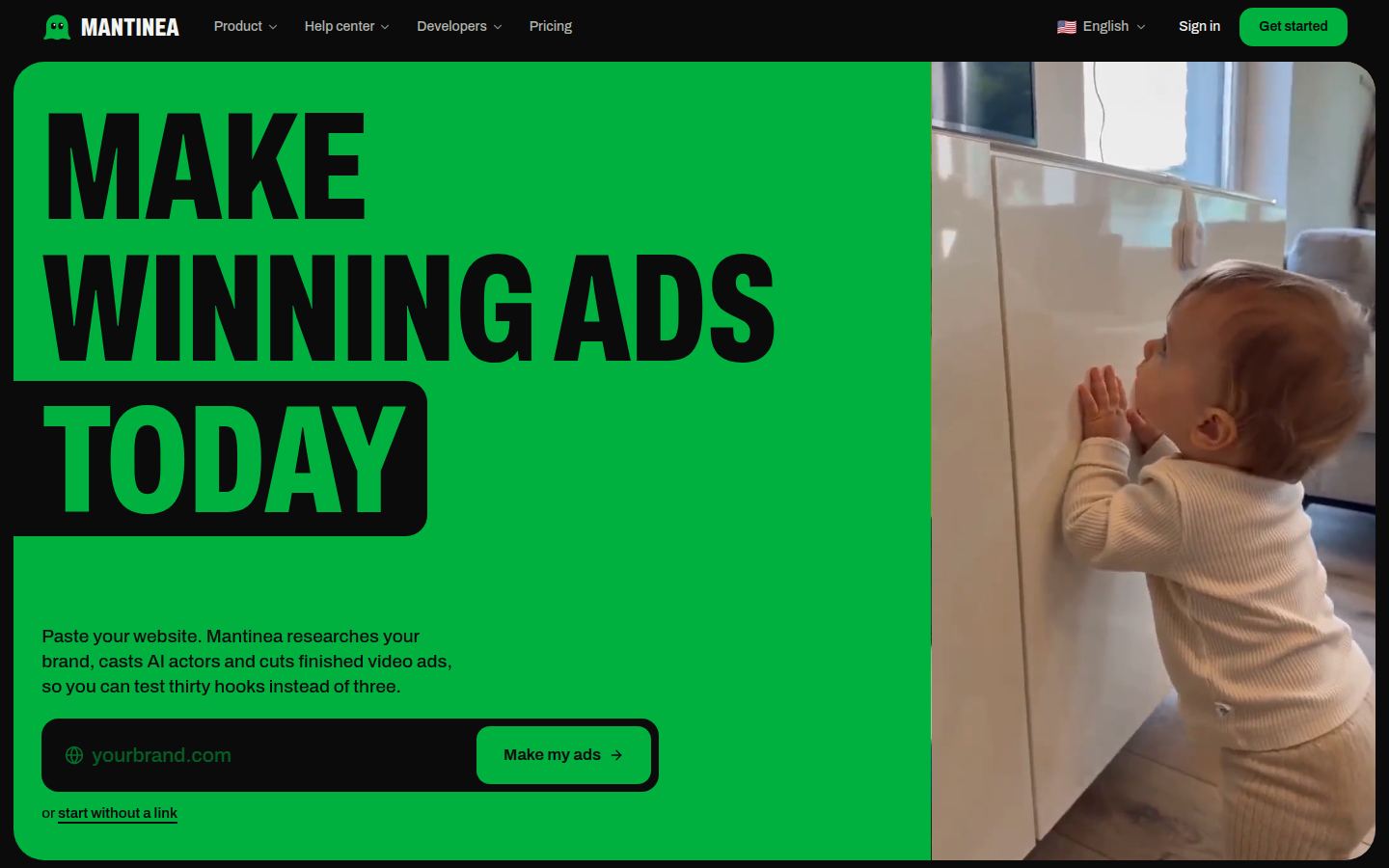
Creator-style spokespeople, with testing and localization built in around them
Specifications
- Ratios
- 9:16, 1:1 and 16:9
- Languages
- 182, lip-synced, ten at once
- Actors
- Synthetic library, Pro actors or your own
- Seats
- Unlimited, all plans
- Trial
- 14 days without a card
- Entry plan
- 2,900 credits for $29/month
Reasons to buy
- +Pro actors come from licensed footage of real stock actors, over 1,100 takes
- +Run one script across lots of actors, hooks and languages
- +24 emotion tags plus a pronunciation dictionary
- +Failed jobs refund automatically, and credits roll over
Reasons to avoid
- −There's no manual frame-by-frame timeline editor
- −Designed for ads, so long training videos aren't its strength
Buy it if Each week you test spokesperson scripts with different actors and hooks
Buy it if Your ads run in more than one language
Don't buy it if You're making a 20-minute presenter-led course
You can pick from three kinds of spokesperson. The synthetic library covers many settings, ages and looks. Pro actors were filmed in their own surroundings and are cut free of any brand. Or make your own actor: from a photo, through a four-step wizard (casting, look, a matching voice, scenes) that runs a free face check before any credits are spent and shows a talking preview, or as a clone from a short video with recorded consent.
You write emotion tags like [excited], [whispers], [laughs] and [sighs] straight into the script, a gestures preset sits alongside, and the pronunciation dictionary keeps every voice saying your brand name the same way. By default, joins between generations are AI-bridged, so longer ads run smoothly.
The tooling around the presenter is why it ranks first. The Variations matrix takes one script across actors, hooks, formats and languages and shows the total cost first. Hook lab charges only for a new opening on an ad that's already working. Captions, Brand finish and Edit video finish the job. A standard 30-second talking ad costs about $4.50, Pro actors cost the same, and the agent's replies are free.
Best host avatar
Best host avatar
2. HeyGen
Polished presenter avatars, where ads are one use among many
Specifications
- Translation
- 175+ languages and dialects
- Seats
- One on Creator, teams from $149 plus $20 a seat
- Free plan
- 3 watermarked one-minute videos monthly
- Style
- Host
Reasons to buy
- +Translation with a glossary and proofreading
- +Personal avatars look realistic
Reasons to avoid
- −Reviewers mention failed renders and burned credits
- −Creator can't buy top-ups
- −No ads library, hook testing or variations matrix
Buy it if You need a founder or host explainer
Don't buy it if You test creator-style ads in batches
HeyGen develops its own avatar models and personal avatars, and it works well when your spokesperson ad is really an explainer. For creator-style testing you'd need a second tool. See our HeyGen review for UGC ads for more.
Best for approval-heavy brands
Best for approvals
3. Synthesia
Corporate presenters, an approval step, and moderation of every video
Specifications
- Paid-plan trials
- United States only
- Moderation
- Humans and AI review each video
- Extra seats
- $29 a month apiece
- Style
- Host
Reasons to buy
- +Offers full-body stock avatars and personal avatars
- +Videos need approval before going live
Reasons to avoid
- −Reviewers say there's no 4K
- −Each render waits for moderation
- −Claims about health, law and finance are restricted
Buy it if Legal has to approve everything before it publishes
Don't buy it if You run fast batches of supplement, finance or skincare ads
Synthesia fits regulated companies. Its moderation queue slows down precisely the categories that rely most on spokesperson ads.
Best budget avatars
Best budget pick
4. Creatify
Inexpensive avatar ads for a single person with a single brand
Specifications
- Rollover
- One more month
- API
- Its own plan at $99 to $299/month
- Seats
- One until Ultra at $95
- Style
- Host and creator
Reasons to buy
- +You can start on a free plan
- +Its voices support emotion tags
Reasons to avoid
- −Policy rules out refunds
- −The agent's chat uses plan credits
- −Plans under $95 give one seat and one brand
Buy it if You're a solo marketer trying your first avatar ad
Don't buy it if A small budget has to cover a team, several brands or the API
Creatify runs its Aurora model with emotion tags such as [laugh] and [excited]. Costs climb once a second person or brand comes in.
Best for large creator-ad budgets
Best for big budgets
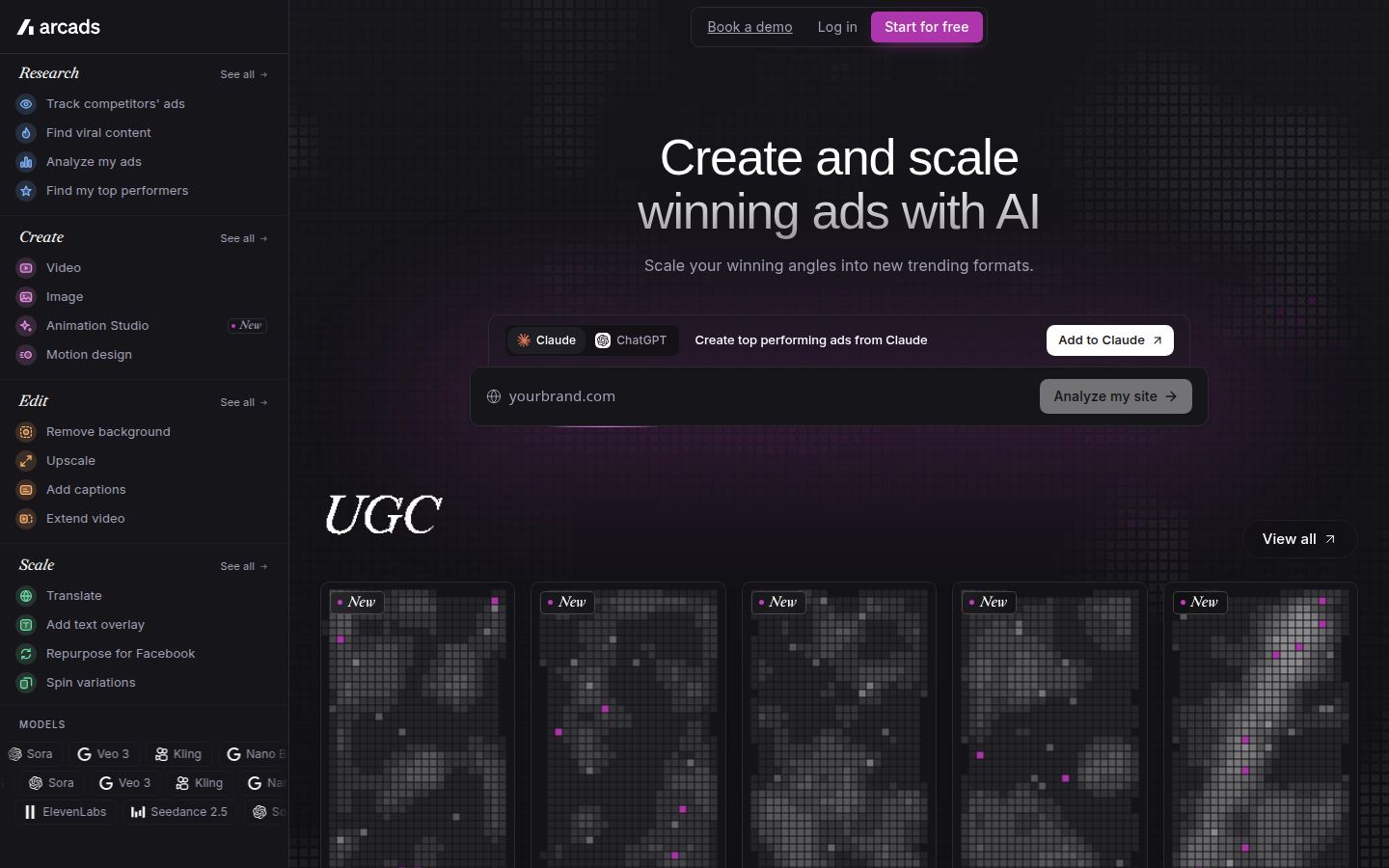
5. Arcads
Premium UGC-style actors, with seats and rollover on the higher plans
Specifications
- Agent chat
- Charged by token
- Seats and rollover
- Pro at $550 and up
- Trial
- 72 hours, card required, becomes $110
- Style
- Creator
Reasons to buy
- +Has a gestures preset
- +UGC-style actors based on real actors who consented and were paid
Reasons to avoid
- −Credits reset on plans below Pro
- −The card trial converts after 72 hours
- −The entry plan costs nearly four times Mantinea's
Buy it if One user with a large monthly budget
Don't buy it if You want a trial without a card or team seats for less than $550
Arcads targets performance marketers with big budgets. We work through its credits in our Arcads plan review.
Best for remakes
Best for remakes
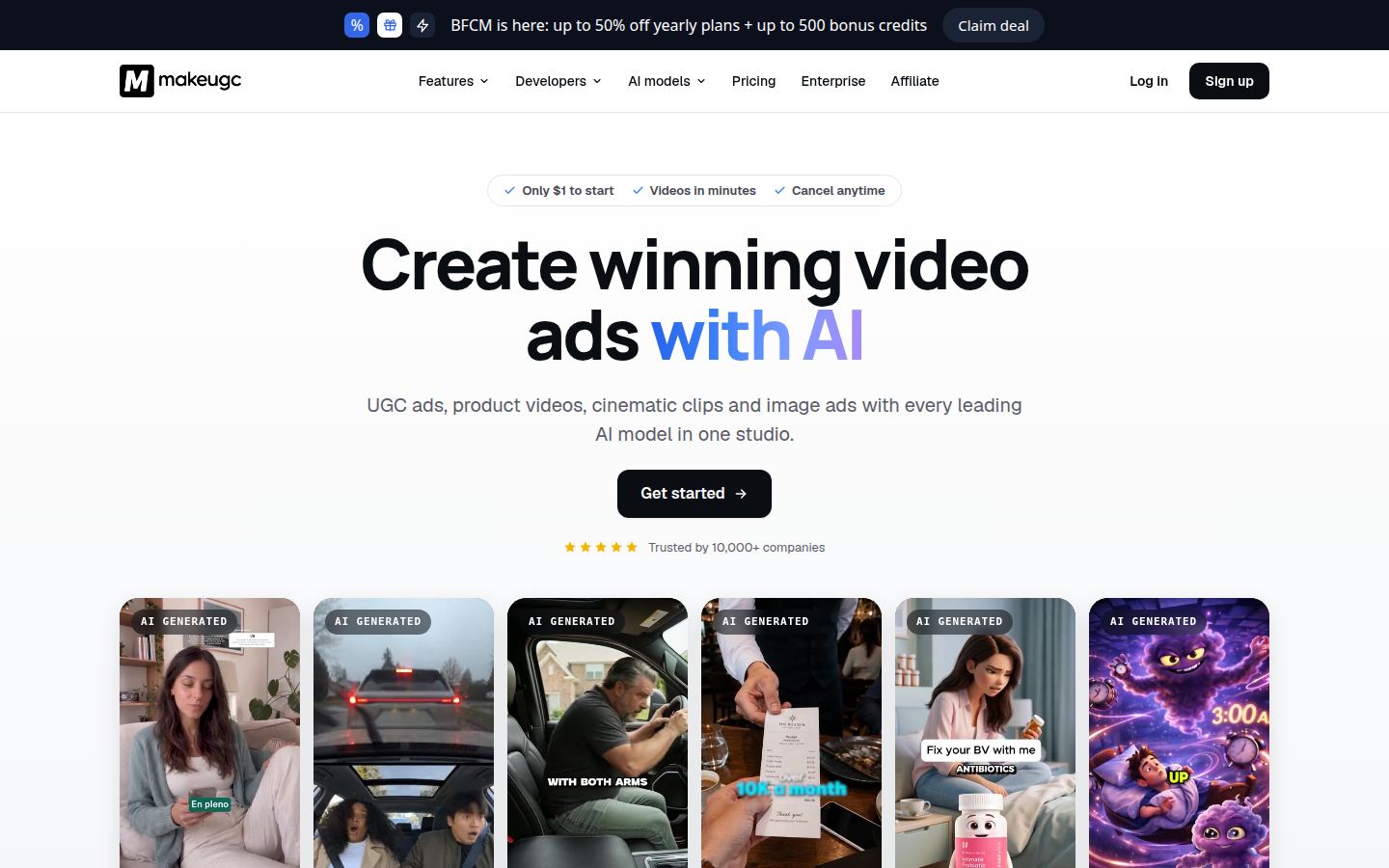
6. MakeUGC
Talking actors with a UGC look, plus a library of real ads to adapt
Specifications
- Rollover
- No
- Starter seats
- None
- Starter export
- 480p or 720p
- Trial
- $1 for 72 hours, then converts
- Style
- Creator
Reasons to buy
- +Ad Remake works from a reference ad
- +A Content Library of real UGC ads sorted by niche
Reasons to avoid
- −Starter offers neither seats nor a custom avatar
- −Fees are final, even for lip-sync problems
Buy it if You'd like to adapt ad structures that have already worked
Don't buy it if The entry plan has to include HD, seats or refunds
MakeUGC runs its actors on its own Make 1.0 model with Product in Hand and gestures, and its billing terms are the strictest on this list.
Best if the spokesperson is you
Best for filming yourself
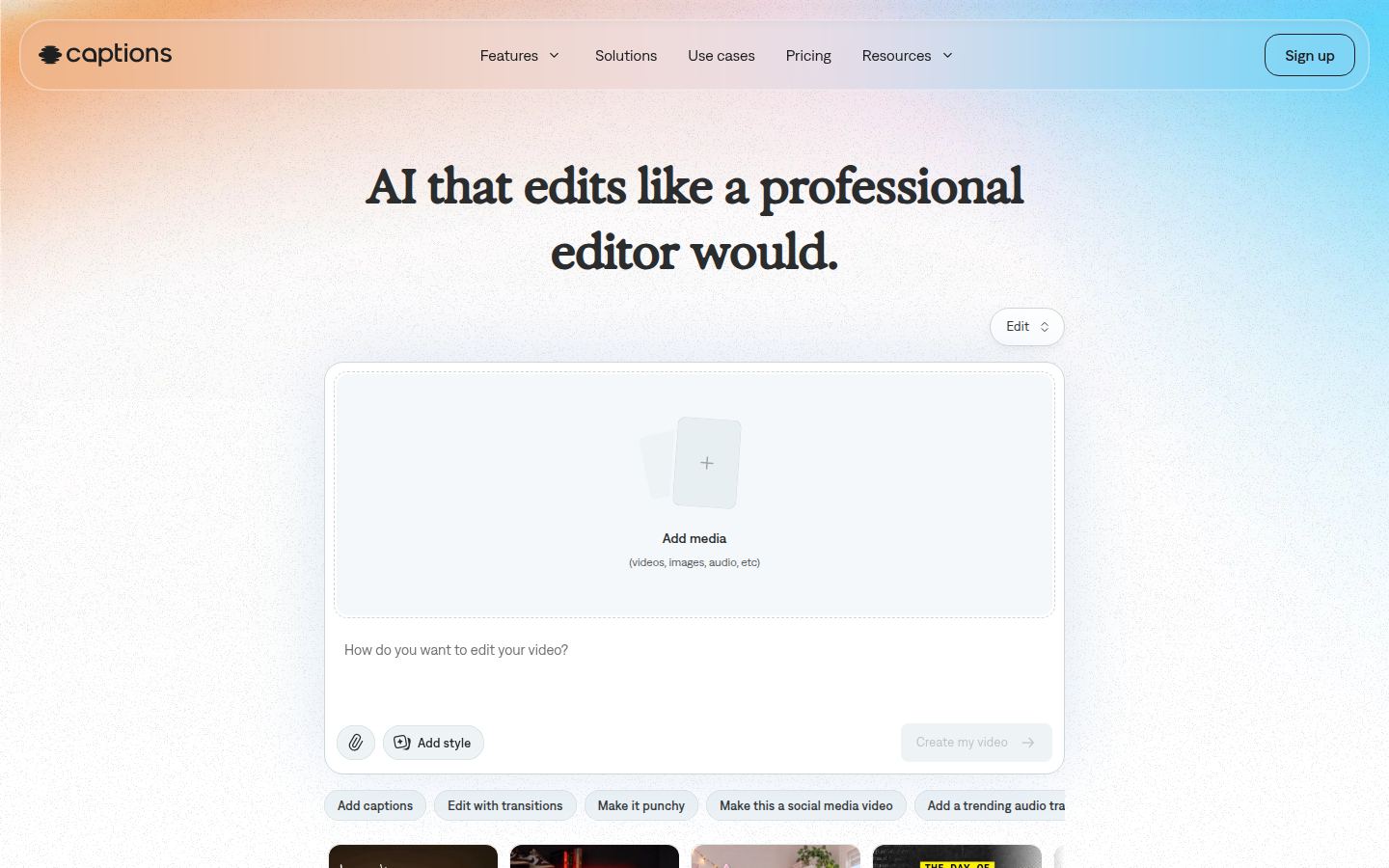
7. Captions
Phone editor with an AI Twin, and AI actors on its top plan
Specifications
- Dubbing
- Over 30 languages
- AI ad length
- Roughly a minute
- AI actors
- Max and up
- Style
- Creator, and it's you
Reasons to buy
- +Over 100 caption styles
- +Corrects eye contact and has a teleprompter
Reasons to avoid
- −AI ads stop at about one minute
- −You need Max for AI actors
Buy it if You shoot yourself and want fast captions and cuts
Don't buy it if You want spokesperson ads without filming anything
When the founder is the face and films on a phone, Captions saves them time.
The seven side by side
| Tool | Languages | Seats at entry | How to try it | Entry price | Style |
|---|---|---|---|---|---|
| Captions | 30+ dubbed | 1 | Not listed | $24.99 for AI actors | You |
| MakeUGC | 50+ | 0 | $1, converts | $59 | Creator |
| Arcads | 74 spoken | 1 | 72 h with a card | $110 | Creator |
| Creatify | 75+ | 1 | Free plan | $15 | Host and creator |
| Synthesia | 70+ dubbed self-serve | 1, then $29 each | Paid trials in the US only | $19 | Host |
| HeyGen | 175+ | 1 | 3 watermarked videos monthly | $29 | Host |
| Mantinea | 182, ten at once | Unlimited | 14 days, no card | $29 | Creator, Pro and your own |
What to check in any demo
- The opening three seconds, since a common complaint is delivery that feels "too clean" after a few seconds.
- Mouth movement and timing at full speed with the sound on; "voice timing unnatural" is the other frequent complaint.
- How the voice pronounces your product name.
- Whether you can put on-screen text on an overlay. Mantinea's overlays are free.
- Whether failed renders get refunded. Mantinea does it automatically, while MakeUGC won't re-credit for quality or lip-sync.
An honest presenter script
Open with a hook: "Here's the one thing most [category] brands won't tell you." First point: "Most [products] do X. This one does Y." Second point: a detail that's specific and true. Proof: cut to your actual product or screen. Close with a call to action: "Link's below if you want to see it."
Don't write "I've been using this for months" unless the actor is your own clone and it's true. Since 21 October 2024 the FTC's rule on fake reviews and testimonials has covered AI-generated ones, and since 9 June 2026 New York has required a conspicuous disclosure when ads use synthetic performers. This isn't legal advice. Our AI actor guide covers consent and sourcing.
Our method
Prices come from each vendor's pricing page, documentation and help center and are dated. We priced a bilingual test with three actors and a three-seat plan using published rates. We ran no hands-on tests.