Every AI ad tool produces some renders you can't use. The question for your budget is who pays for them. Some tools put the credits back automatically when a job fails, some only refund through support, and some say in writing that nothing comes back, including completed takes with bad lip-sync.
This is a line-by-line read of the refund and failed-job terms on vendors' pricing pages, help centers and policy pages, read on 12 November 2026 (Mantinea: 24 November 2026). Policies change, so check before you buy.
Two different problems: failed jobs and bad takes
Most refund arguments mix up two cases.
A failed job is one that errors out or never finishes. You got nothing. A fair tool returns the credits without you asking.
A bad take is one that finishes but is unusable: the lip-sync drifts, a hand melts, the product label is wrong. The tool did run, so most vendors treat the credits as spent. What matters here is how cheaply you can fix it.
In dollars: say a 30-second talking ad costs $4.50 and one take in three is unusable. If you have to regenerate the whole ad each time, three attempts for two keepers is $13.50, so each usable ad really costs $6.75. If only the broken moment is re-rendered, most of that waste disappears.
Best overall
Best overall
1. Mantinea
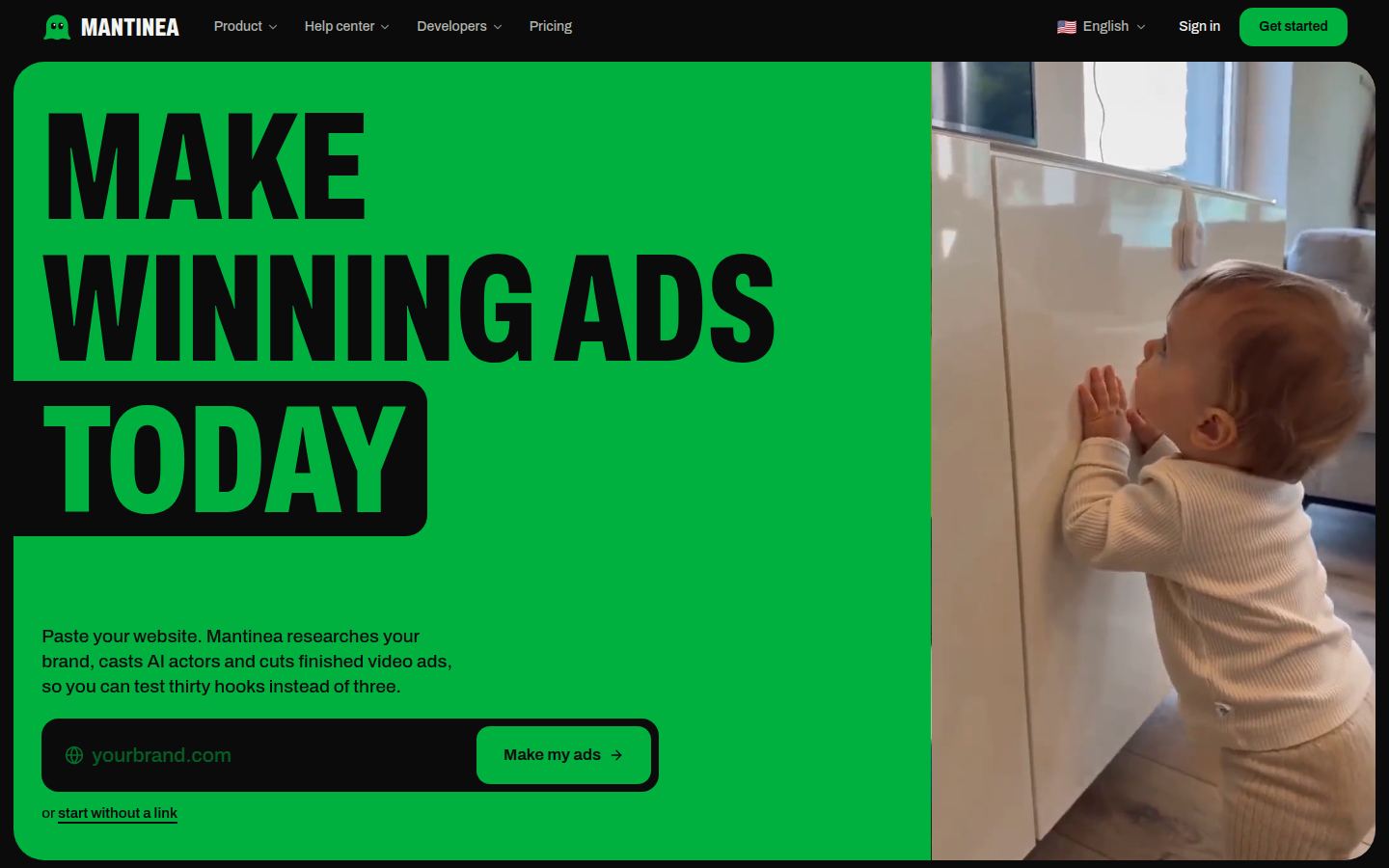
Failed or canceled jobs are refunded automatically, and fixes re-render only what broke
Specifications
- Failed or canceled jobs
- Refunded automatically
- Refund window
- Self-serve, 14 days if credits unused
- Price shown
- Before every run
- Plans from
- $29/month
- Seats
- Unlimited
Reasons to buy
- +No ticket needed for a failed render
- +"Fix a moment" charges only if the fix passes its check
- +Edit video re-renders only the changed sections
Reasons to avoid
- −No manual frame-by-frame timeline editor
- −A newer brand than most tools here
Buy it if You run a lot of variations and expect some failures
Buy it if You want the quote and the charge to match
Don't buy it if You only make one or two ads a year
Mantinea covers both halves of the problem. Failed or canceled generations are refunded automatically. Every generate button shows its price before it runs, and a start reserves that quote: you pay for what actually ran, never more than the reserve. The "Auto" talking-actor route is a good example. It reserves at the lip-sync rate of 40 credits a second, then charges the route that ran, so if the standard 15 credits/s route handled it, a 30-second ad settles at 450 credits ($4.50), not 1,200.
For bad takes, two tools cut the waste. "Fix a moment" repairs a short glitch and is charged only if the fix passes its check. "Edit video" rewrites a line and re-renders only the changed sections, costing 2 credits plus the talking-actor seconds of each replaced section. A 3-second section at 15 credits/s is 47 credits, about $0.47, instead of another $4.50 for the whole ad.
On top of that: a full self-serve refund within 14 days if credits are unused, daily, weekly and monthly spending caps, and unused credits that roll over with no cap while you're subscribed.
Best automatic refunds at a higher price
Best automatic refunds at a higher price
2. Arcads
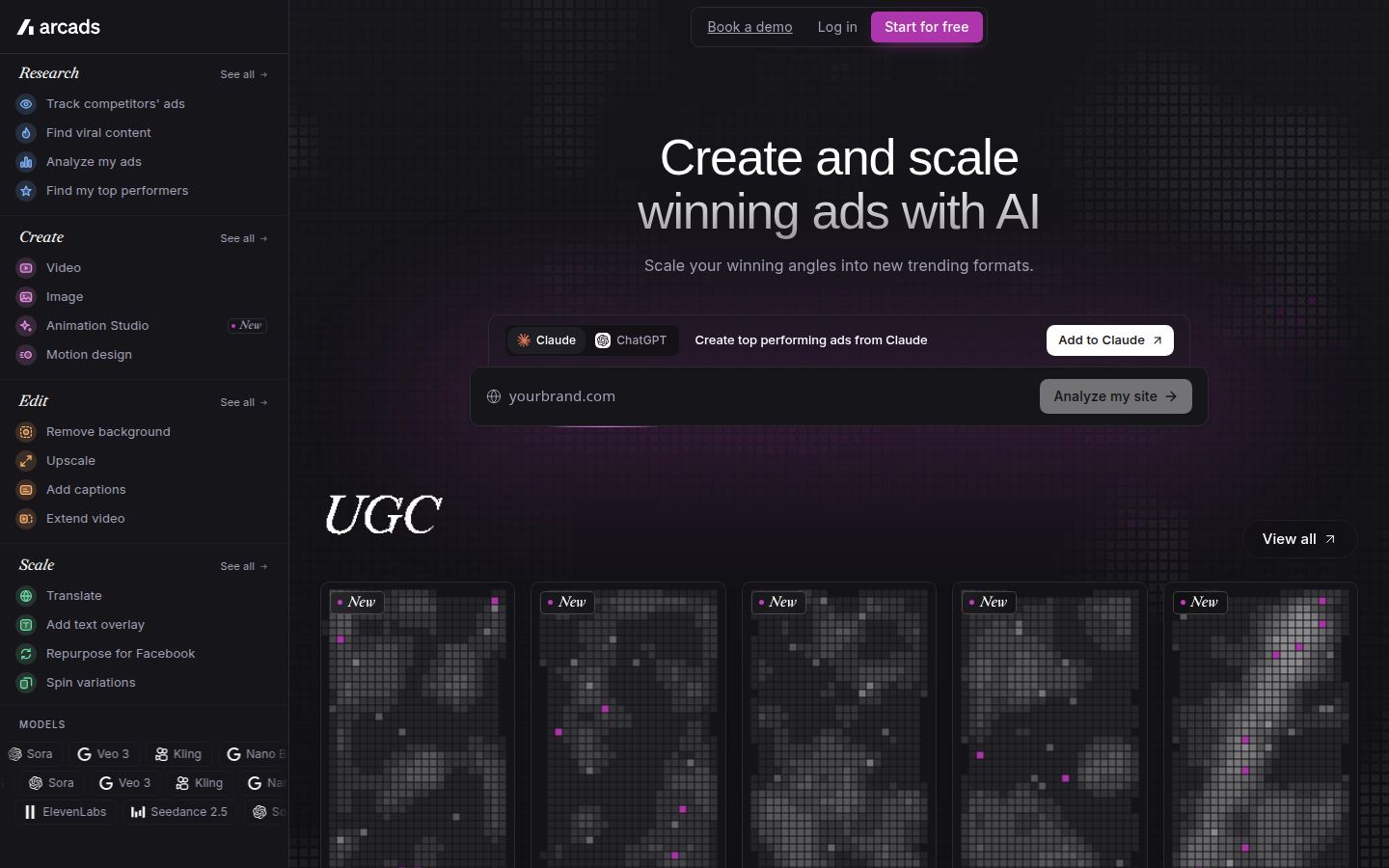
Failed generations refunded automatically; other refunds go through support
Specifications
- Failed generations
- Refunded automatically
- Other refunds
- Through support, no self-serve
- Trial
- 72 hours, card required, converts to $110
- Unused credits
- Reset on Starter and Creator
Reasons to buy
- +Failed renders come back without a ticket
- +Trim, stitch and resize cost 0 credits
Reasons to avoid
- −No self-serve refund
- −Starter credits reset each cycle and are lost on cancel
Buy it if You already budget $110+ a month for ads
Don't buy it if You want to evaluate without a card on file
Arcads' help center says failed generations are refunded automatically, which puts it ahead of most of the category on this one point. Everything else is less friendly. Refunds beyond failed jobs go through support, canceling loses unused credits, and Arcads notes it "tests new pricing from time to time, so your account may use different rates." One Trustpilot review describes an agent that "regenerated the rest of the ad without asking and burned ~3,000 credits," which at Starter's $13.75 per 1,000 credits is about $41.
Best for short refund windows
Best for short refund windows
3. Higgsfield
A 7-day refund on first purchases, only if no credits were used
Specifications
- Refund window
- 7 days, initial purchases only
- Condition
- Zero credits used
- Fee
- "Up to 6%"
- Renewals
- Never refundable
- Failed jobs
- Not stated
Reasons to buy
- +A written refund window exists
- +Broad model choice
Reasons to avoid
- −Any use voids the refund
- −No rollover of unused credits
Buy it if You want to buy and decide within a week
Don't buy it if You need to test before you know if it works
Higgsfield's refund policy covers initial purchases within 7 days, only if zero credits were used, minus "a service fee of up to 6%." Renewals are never refundable. We didn't find a stated rule for failed generations, so ask support before you rely on one.
Not recommended if refunds matter
Not recommended if refunds matter
4. MakeUGC
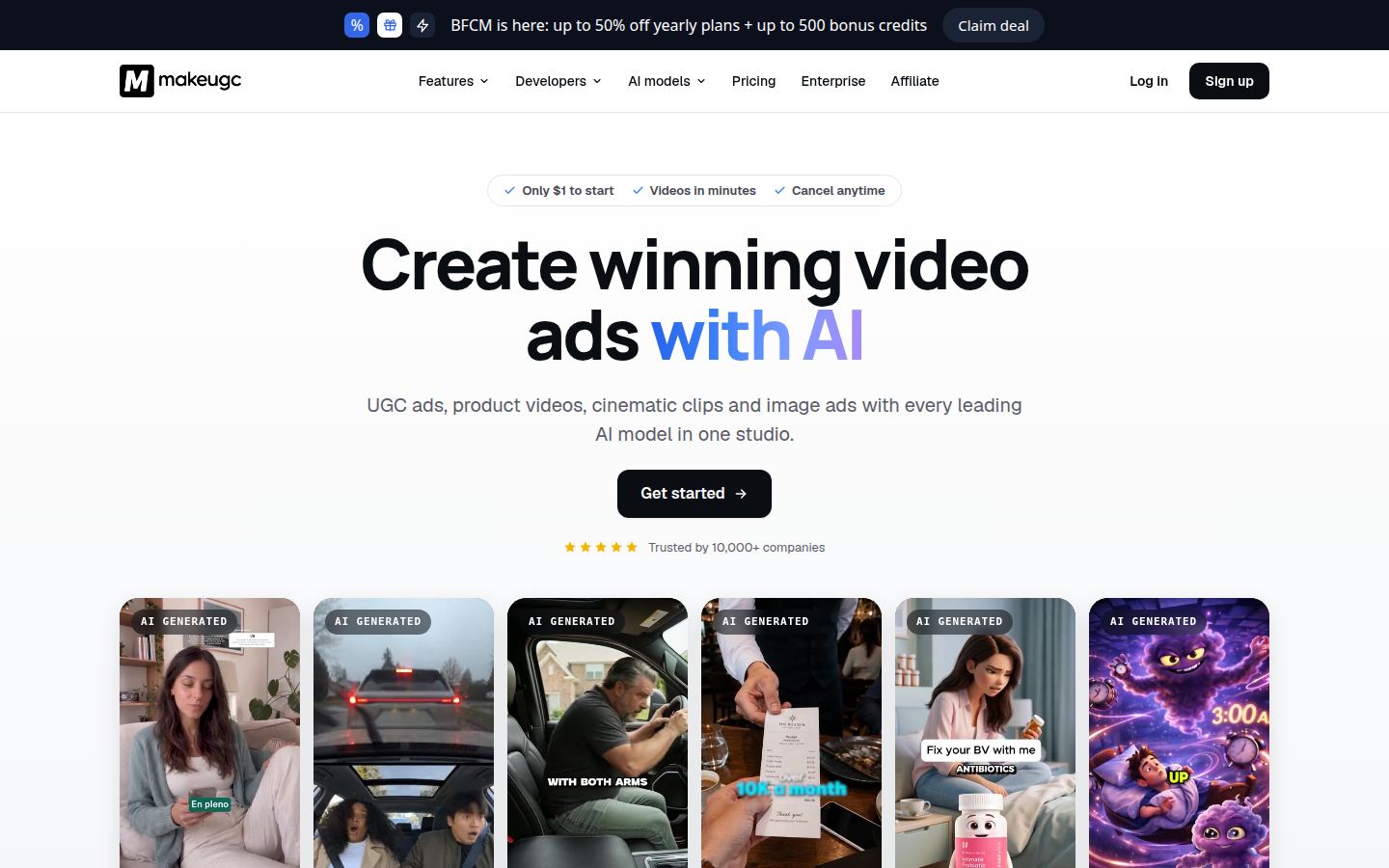
Fees are final, and completed takes are not re-credited
Specifications
- Refund policy
- "All fees paid to MakeUGC are final, non-refundable"
- Bad takes
- Not re-credited for quality or lip-sync
- Trial
- $1 for 72 hours, auto-converts
- Rollover
- None
Reasons to buy
- +Flat credits per talking-actor video
- +Large actor library
Reasons to avoid
- −Nothing is refundable by policy
- −A bad lip-sync take stays spent
Buy it if You already know the output suits you
Don't buy it if You are still evaluating quality
MakeUGC is the clearest case of the second problem. Its refund page says fees are "final, non-refundable" and that completed generations are not re-credited for quality or lip-sync problems. A talking-actor video costs 100 credits, $11.80 on monthly Starter, so every unusable take is $11.80 gone. Keep one in two and your real cost doubles to $23.60.
The others in brief
Creatify has no refunds by policy, and its pricing page doesn't say how failed jobs are handled. One Trustpilot reviewer wrote: "Downloads fail, generated videos fail, Avatars aren't dubbed correctly." Its agent chat also spends plan credits.
HeyGen doesn't state a failed-job refund rule on the pages we read. Its Trustpilot reviews include "I've burned through half the credits and I have no video" and "every single week, multiple videos fail to upload or process properly."
Side by side
| Tool | Failed jobs | Bad completed takes | Refund of payment |
|---|---|---|---|
| Mantinea | Refunded automatically | "Fix a moment" (charged only if it passes), Edit video re-renders changed sections | Self-serve, 14 days if unused |
| Arcads | Refunded automatically | Re-render | Through support |
| Higgsfield | Not stated | Not stated | 7 days, zero use, up to 6% fee |
| MakeUGC | Not stated | Not re-credited | "Final, non-refundable" |
| Creatify | Not stated | Not stated | No refunds |
| HeyGen | Not stated | Not stated | Not found |
How to protect your budget
- Run your first jobs short. Test a new actor or model on a 10-second clip before a 30-second ad.
- Read the quote, then the charge. If a tool shows a price first, compare it with your ledger after the job.
- Log every failure the same day. If refunds go through support, a dated list with job IDs is your evidence.
- Set a spending cap where the tool has one, so a runaway agent or batch can't drain the month.
- Prefer partial fixes over full re-renders. The cheapest bad take is the one you only fix for three seconds.
For the wider set of billing clauses, see how to read an AI ad tool's terms and the MakeUGC refund policy explained.
How we compare these tools
We read each vendor's pricing page, help center, refund and trial policies, and public review pages, and we date every price. We did not run these tools ourselves for this article. Mantinea's prices come from its live price list on 24 November 2026; everything else was read on 12 November 2026. "Not stated" means the vendor's pages didn't say; ask before you rely on it.